The 'Hide page' button at the bottom left of your screen will quickly take you to Google.
Alternatively use Ctrl + W (PC) or Command + W (Mac) on your keyboard to close this tab.
You can contact our Helpline by calling 0808 800 5000 or emailing [email protected].
Our voice Helpline is available 10am–4pm Monday to Friday. You can email [email protected] at any time for free. You have the option to remain anonymous.
If we have not yet responded to you and your concerns for the safety of a child increase, please contact the police or local Children’s Services directly. Please be assured that we'll action all contacts that our Helpline receives.
Childline offers free, confidential advice and support whatever your worry, whenever you need help.

Domestic abuse is any type of controlling, bullying, threatening or violent behaviour between people who are or have been in a relationship. It can also happen between adults related to one another. It can seriously harm children and young people, and experiencing domestic abuse is child abuse.
It's important to remember that domestic abuse:
Domestic abuse can be emotional, physical, sexual, economic, coercive or psychological, such as:
Worried about a child? Don't wait until you're certain.

It can be difficult to tell if domestic abuse is happening and those carrying out the abuse can act very different when other people are around. Children and young people might also feel frightened and confused, keeping the abuse to themselves.
Signs that a child has experienced domestic abuse can include:
Living in a home where domestic abuse happens can have a serious impact on a child or young person's mental and physical wellbeing, as well as their behaviour. This can continue after the adults' relationship has come to an end, and post-separation abuse and coercive controlling behaviours can continue to remain a factor in the child’s life. The impact can last into adulthood.
What's important is to make sure the abuse stops and that children have a safe and stable environment to grow up in.
Our services can support children and young people who have experienced domestic abuse to help them move on and receive the care they need.
If a child talks to you about domestic abuse it's important to:
Worried about a child? Don't wait until you're certain.
If you're an adult experiencing domestic abuse, there are organisations that can help.
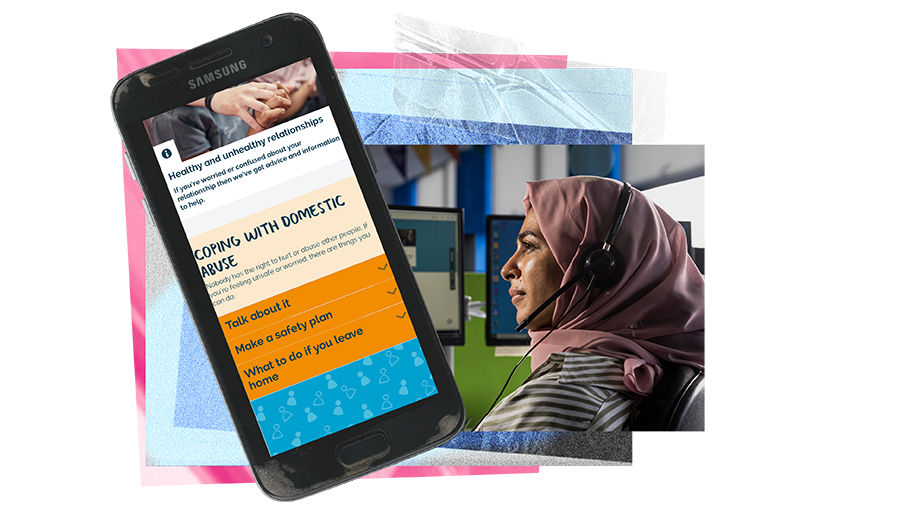
Our Domestic Abuse, Recovering Together (DART™) is a therapeutic service for mothers and children who have experienced domestic abuse.
Find out more about all our services for children, including how to get in touch with ones in your area.
The Hide Out, created by Women's Aid, is a space to help children and young people understand abuse. It also helps them learn how to take positive action.
How Childline can help
We understand how difficult it is for children to talk about domestic abuse. Whether it's happening now or happened in the past, Childline can be contacted 24/7. Calls to 0800 1111 are free and confidential. Children can also contact Childline.
Childline has information and advice for children and young people about domestic abuse, including why it happens and what they can do.
If you are, or think you might be, domestically abusing a member of your family, there's help available. Contact our Helpline by calling 0808 800 5000 or emailing [email protected].
Respect offers information, advice and support to perpetrators of abuse.