Contact the NSPCC Helpline
You can contact our Helpline by calling 0808 800 5000 between 10am and 4pm, Monday to Friday, or by emailing [email protected] between 11am and 4pm, seven days a week. If you send an email when the service is closed, it won't be received, and we won't know that you've tried to get in touch.
If we have not yet responded to you and your concerns for the safety of a child increase, please contact the police or local Children’s Services directly. Please be assured that we'll action all contacts that our Helpline receives.
Under 18?
Childline offers free, confidential advice and support whatever your worry, whenever you need help.
Growing up
"I grew up in Surrey in a beautiful house with my mum, dad and two sisters. I felt really lucky growing up there. We were really happy and we never wanted for anything. Mum and Dad were brilliant parents, they cared so much about us and always put us first in everything. They supported anything we wanted to do.
I went to a mainstream school up until I was seven, when I started falling behind in Maths and English. I was diagnosed with dyslexia, but it wasn’t very well known back then and there wasn’t much support.
My parents tried to do the right thing so sent me to a special school but it was more for children who had physical disabilities so it wasn’t quite right.
After 18 months, I moved to a small private school that was perfect. It had a specific support for dyslexia and had a big performing arts department. I loved that school and I did really well there."
The taxi journeys
"I was nine when I started getting taxis to and from school because we lived quite far away. He’d drop me to dance lessons too so I used to spend quite a lot of time in the car. I always had the same driver and he was very friendly towards me.
He made me feel grown-up because he would tell me adult things which felt exciting. He told me jokes with swear words which I knew I shouldn’t be hearing and as a nine-year-old, that makes you feel very special.
He started telling me about his relationship too and then moved onto telling me about his sexual relations between him and his partner."
"He made me feel grown-up because he would tell me adult things which felt exciting."
When the abuse started
"I remember the first time he abused me. He got a camcorder out of the boot and he told me a customer had left it in the car. It was a big old one and you had to put your eye to the view-finder to see the tape. He told me to watch the film, so I did and it was pornography. That’s when the abuse started and it escalated from there.
I think my physical size and learning difficulties meant he targeted me because I was more vulnerable than other children. I looked a few years younger and was behind academically. He exploited the fact that we spent time alone and was able to groom me over a long period of time. He knew I was behind my peer group and took advantage of that.
He made me feel like we were in a relationship which was really appealing because it made me feel liked and important and grown up. I always wanted to be more like my peers, bigger and taller and more like them. But I wasn’t, I was the smallest and weakest. He didn’t make me feel like that, his attention made me feel mature and I loved it. He was careful in his abuse too, he wasn’t aggressive and he didn’t hurt me."
Living with the secret
"Sometimes I used to threaten him that I’d tell everyone what was going on. He would make me feel guilty and say his children would be taken away if I did. He used to threaten to hurt my mum and dad in return as well. So, I was scared, and didn’t tell anyone.
I also started viewing it as a relationship and I grew to like what was happening so didn’t want it to stop. It’s taken a long time for me to say that and it’s only through the court process and counselling that I’m able to admit that.
It meant I normalised sex at a really young age. I was talking about sex at the age of ten, but no one picked up on it and asked how I knew those things. My friends didn’t understand what I was talking about. He took my childhood and innocence away from me in that way. Looking back, I wonder how no one noticed what was going on.
It went on for three years and eventually stopped when I was twelve because my mum started taking me to school. My behaviour started changing and I started coming out of my shell more. My confidence really improved."
"I started viewing it as a relationship and I grew to like what was happening so didn’t want it to stop."
Calling the NSPCC Helpline
"At the beginning of 2017 I saw a programme on TV about sexual abuse and survivors and it brought everything back. My anxiety was really bad at this time so I went to the doctors but they were no help, so my mum suggested I call the NSPCC. Initially I thought ‘I’m too old to call them, they won’t want to hear from me’, but I looked at the website and realised the NSPCC Helpline was for everyone.
I called the Helpline and spoke to a practitioner for about an hour. He was really understanding and took the time to listen to me. I felt comfortable talking to him, and most importantly I felt believed. I think that’s one of the biggest barriers to people coming forward – the fear of not being believed. He made me feel like what I was saying was important and that my story mattered. I was also anxious that because my abuse happened so long ago, it wouldn’t be relevant today – but he reassured me that it definitely did matter and was just as serious today as it was when it happened. I worried that my abuse wasn’t as ‘serious’ as other people’s that I’d seen on the TV but again, he reassured me it was serious.
He explained all my options but urged me to call the police and helped me understand why it was so important for me to do so."
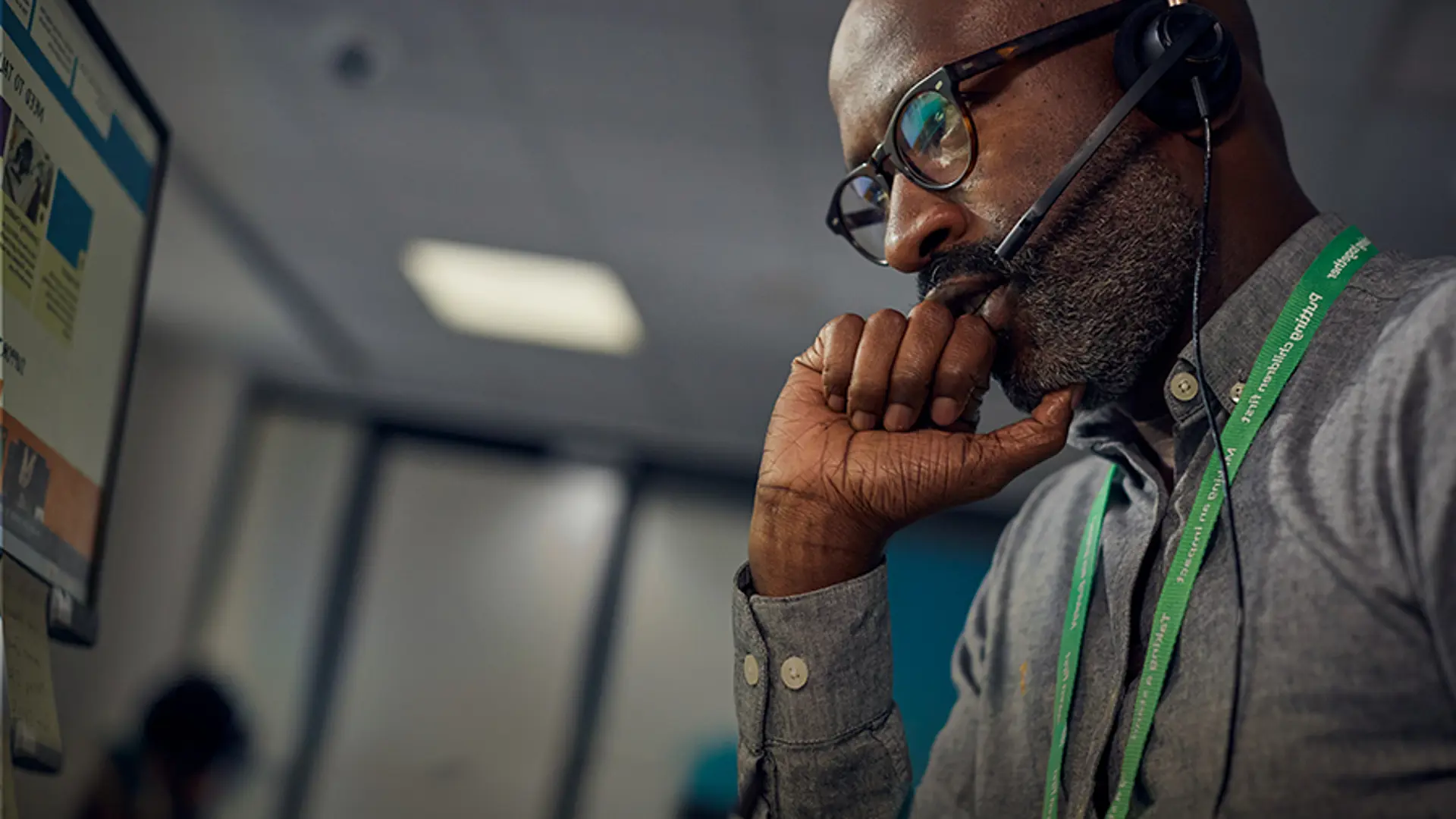
"He reassured me that [the abuse] did matter and was just as serious today as it was when it happened."
Reporting the abuse
"I called the police as soon as I hung up and two officers came around to take my statement. The police investigation took three years and I had a very difficult time coping with it. It made my anxiety worse and brought up the PTSD. It was probably one of the hardest times of my life. When I heard he’d been found guilty in December 2019, I just felt numb. It took me a year to process it."
Finding my voice
"At the beginning of 2020, I felt like something was holding me back. I felt like I should have been ecstatic but I didn’t. I knew I had to start speaking out and stop suppressing everything, so I posted on social media and told everyone what had happened. The response was overwhelmingly positive and supportive so I wrote a blog, and then began a children’s book. The whole process has been very therapeutic and really helped. I’ve had therapy too and it’s meant I can move on with my life and have been able to come off my anti-depressants.
I feel like I owe so much to the NSPCC for giving me the advice I needed at the time I needed it. I wouldn’t have called the police and I wouldn’t have got the prosecution. They even played the recording of my call to the NSPCC Helpline as evidence.
Now I want to speak out to reduce the stigma and shame surrounding the topic of abuse. I want people to be able to talk about it and not hide it. I speak to my daughter about it and use the NSPCC PANTs pack. She will know about what happened to me and I’ll help her understand that she can always tell me everything and she’ll always be believed."
NSPCC Helpline
Whatever the issue, we're here to keep children safe. Our Helpline staff will always provide expert advice and support.
- Call: 0808 800 5000
- Email: [email protected]