
Contact the NSPCC Helpline
You can contact our Helpline by calling 0808 800 5000 between 10am and 4pm, Monday to Friday, or by emailing [email protected] between 11am and 4pm, seven days a week. If you send an email when the service is closed, it won't be received, and we won't know that you've tried to get in touch.
If we have not yet responded to you and your concerns for the safety of a child increase, please contact the police or local Children’s Services directly. Please be assured that we'll action all contacts that our Helpline receives.

Under 18?
Childline offers free, confidential advice and support whatever your worry, whenever you need help.
Parents and carers of elite athletes

As parents and carers, you play a key role in your child or young person’s health, wellbeing and overall success in their career on the talent pathway.
Parents of talented young athletes
We know how challenging it can be for families to balance childhood and the high-competition environment that young athletes face.
Put the child first in sport
Parents and carers should always put what their child wants and needs over any of their sporting commitments.
Regularly talking to your child about how they feel can help them to know that you are there to listen to any worries they may have. And being careful about what feedback you give them about their performance can also help them feel well supported. Remember – it's their sport.
If you are worried that your child is being abused or at risk during their involvement in sports, it is vital that you talk to someone. Contact the NSPCC Helpline for advice.
Set a good example
Our Keeping Your Child Safe in Sport campaign provides lots of useful information about how to display positive behaviour as a sport parent, even during tough times before, during and after sport.
Young athletes are still children, so helping them to feel supported and to feel safe to raise concerns is part of being a positive sport parent.
What else you can do
The key to parents and carers supporting children and young people who are performing at high sporting levels also includes:
Make sure you know when you are responsible for looking after your child at events, competitions and training.
Talk to care providers, including coaches, event organisers and chaperones to make sure you know drop-off and pick-up details.
Check who is responsible for your child at an event when they aren't playing or competing.
Ask your club what safeguarding arrangements it has in place to protect your child.
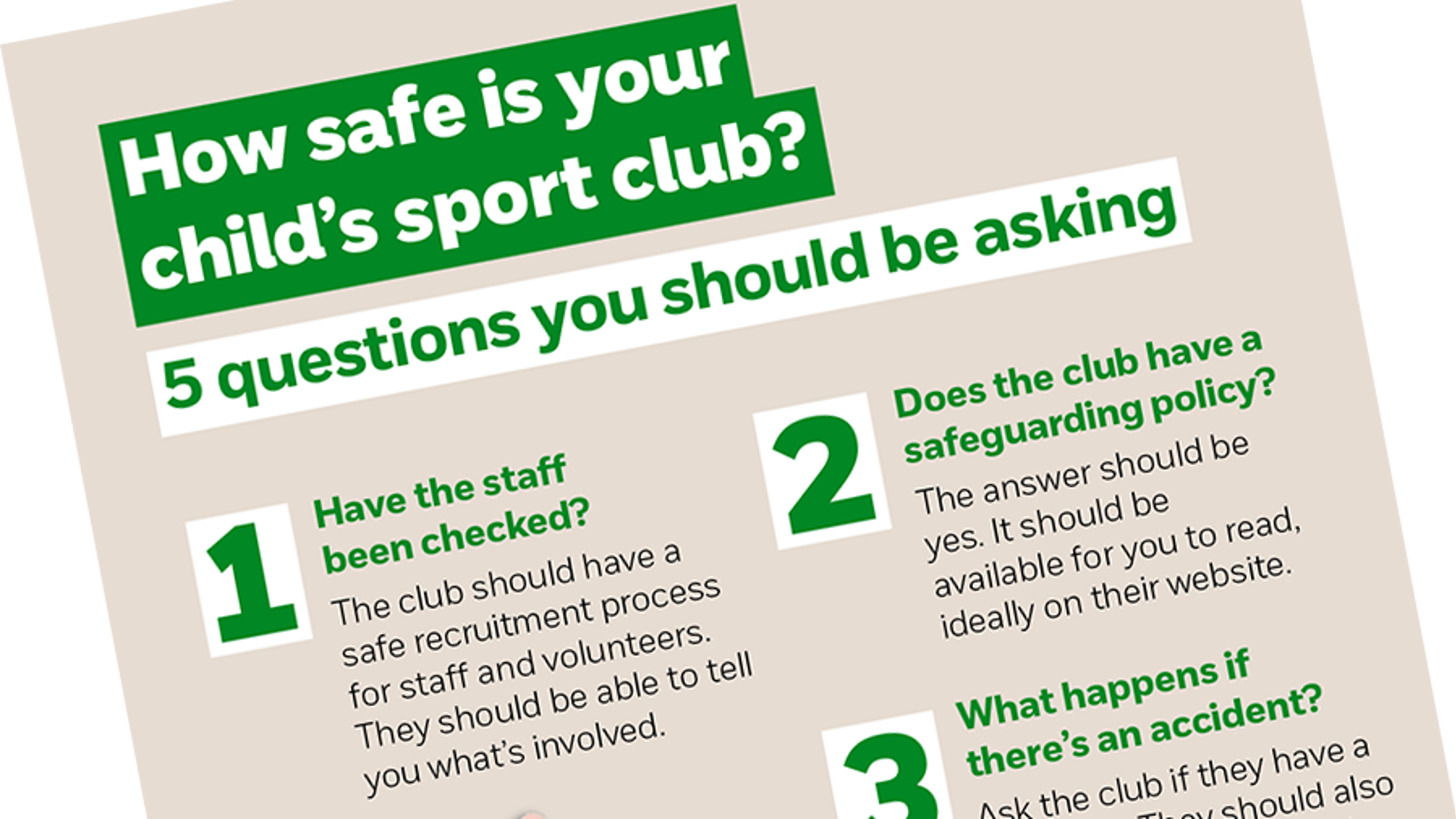
Download our poster, which covers the five key questions that you should feel confident about asking your child’s sports club.
Coaches, parents and carers should always communicate effectively and work together to support young people. Make sure you all talk to each other, to understand and support your child's needs.
For example, if the coach is discussing recovery ideas with your child, you should be involved in the conversation too. Everyone who looks after them will know what they should be doing and why.
Sometimes you might disagree with a decision that a coach has made. For example, your child may not have been selected for a team or competition. But unless you really believe the decision has been made on the basis of inappropriate bias or misconduct, your focus should be on supporting your child.
Avoid conflict with the coach, and if you want to understand why they made a decision, ask them calmly, politely and away from any young people. Some outcomes and decisions are disappointing and tough, but it's important to put your own feelings aside and focus on how you and the coach can both support your child in their enjoyment and success.
A young person may feel more upset if they see their parents reacting negatively to the decisions made, and they could think you're making it worse.
Listen to your child and support them in their feelings towards the decision. Where possible, encourage your young athlete to see that they are on their own continual journey of improvement, and there will be future opportunities for progression.
Building positive parent-coach relationships can help young people to succeed in and enjoy sport.
Funding a young person through elite and high-performance sport can be a huge financial cost for parents and carers. But young people shouldn't feel that they are becoming a financial burden.
By openly talking about the costs and financing of their involvement in their sport in a positive way, you can help the young person to understand money and how to manage it.
There may be opportunities to earn or be given funding within high-performance sport, through being awarded a grant, winning a bid or being approached with sponsorship deals.
Work with coaches and sports professionals to understand what funding opportunities may be available, and how to apply for and secure appropriate funding.
Check that any scholarships or sponsorship deals that come up are legitimate, and are appropriate for your child. Make sure you all understand what you're signing up to and that your young athlete or player isn’t being tied into a contract that requires them to do anything they can’t, or don’t want to, commit to.
You might also like


We all want children and young people to enjoy taking part in sport – and parents play a key role in that. Find out what else you can do.