
Contact the NSPCC Helpline
You can contact our Helpline by calling 0808 800 5000 between 10am and 4pm, Monday to Friday, or by emailing [email protected] between 11am and 4pm, seven days a week. If you send an email when the service is closed, it won't be received, and we won't know that you've tried to get in touch.
If we have not yet responded to you and your concerns for the safety of a child increase, please contact the police or local Children’s Services directly. Please be assured that we'll action all contacts that our Helpline receives.

Under 18?
Childline offers free, confidential advice and support whatever your worry, whenever you need help.
What makes a good sports club?

Good sports clubs and activity providers work hard to keep your children safe in their care. They will have safeguards in place to make sure they’re taking care of children during sessions, practices and any away trips and competitions.
What should be in place at your child’s club or activity?
Ask your child's club about the areas below. You have a right to know these things and any good club will be happy to let you know what they have in place.
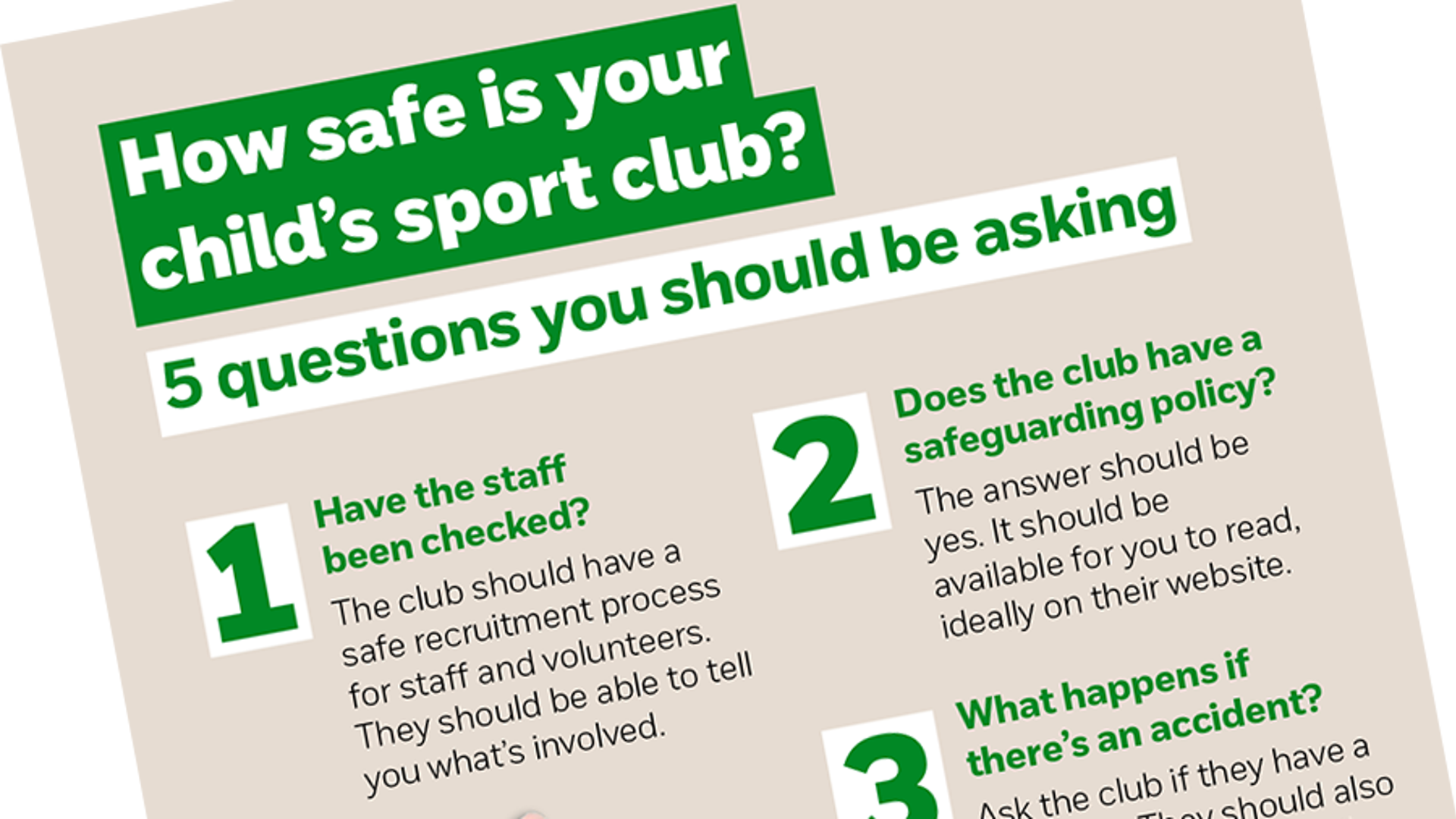
1. Safeguarding lead
Every club should have a club welfare officer or safeguarding lead who you can contact if you have a concern. You should be given this person’s contact details. If not, their details should be available from any coach or be displayed on the club or activities website or in their venue.
2. Safeguarding policy
Clubs and activity providers should have a safeguarding policy which outlines their commitment to protecting children and a clear procedure for dealing with all concerns. You should be able to see a copy of this policy.
3. Codes of conduct for staff, children, parents and spectators
There should be written codes of conduct (or behaviour) showing what is required of staff, volunteers, participants, spectators, parents and carers. These codes should highlight the rules about what behaviour is expected and how this will be addressed if they are not upheld.
4. Safeguarding training for staff and volunteers
Anyone working with children and young people should have received some level of safeguarding training. The level of safeguarding training required depends on the type of role they have and what type of contact they have with children.
5. Safe ways of recruiting staff
All staff and volunteers should be subject to safer recruitment processes, which means that they’ve been interviewed, the organisation has seen references, and Disclosure and Barring Service (DBS) or criminal records checks for working with children and young people have been carried out where applicable.
6. Consent
We advise that any child under the age of 16 needs their parents' or carers' to join a club or activity. Part of giving your consent means you’re aware of the kind of club or activity you’re sending your child to and that you’re comfortable letting them attend.
National governing bodies of sport (NGBs)
A national governing body (NGB) is the main organisation responsible for overseeing a particular sport in a country. It sets the rules, organises competitions, trains coaches, referees and volunteers, and makes sure clubs and athletes follow standards, including safeguarding. For example: in football in England, the NGB is the Football Association (FA).
NGBs are usually recognised by the government or national sports councils (like Sport England or Sport Wales) and often link to international bodies (like FIFA for football).
Not all sport clubs or physical activity providers are governed by an NGB. Even if clubs are affiliated to the same NGB, elements of how they operate may vary.
Here are a few ways you can check to see if your child's club is part of an NGB.
- Check the club’s website or social media and look for mentions like “affiliated with [NGB name]” or logos of the governing body.
- Visit the NGB’s website. Most NGBs have a “find a club” or “affiliated clubs” section where you can search by location or club name.
- Ask the club directly. You can email or call the club and ask if they are affiliated with an NGB.
- Check with sport councils such as Sport England, Sport Wales, Sport Northern Ireland or UK Sport. They often have directories or can point you in the right direction.
What else is good to know?
Child development happens at different stages, but your child is ready to take part in any structured sport when they have the necessary physical, mental, and social skills to meet the demands of a sport.
In real terms, this could mean taking turns, following instructions, regulating their emotions without help, understanding their own strength, or having the muscle and body needed to physically take part safely. This could also mean recognising that your child might not be ready until they are older than their friends, and that is okay.
- For non-contact sports, most children can safely start at age 5-7: sports like skating, golf, gymnastics, athletics, rounders, swimming, tag rugby and tennis. This includes non-contact versions of football, and martial arts.
- For contact sports, age of 8-10 is recommended: sports like basketball, contact martial arts, contact football, wrestling.
- For collision sports, paediatric sport specialists recommend that children have the physical maturity of 10-12-year-olds before they get involved: sports like ice hockey, lacrosse, and rugby.
As a parent, you should feel happy that the club you choose has the right environment and standard of coaching. For example, in rugby, young players start graduated contact at under-nines but well-run clubs won’t expose children to competitive contact until they are satisfied the child is ready.
And always remember ‘If in doubt, sit them out’ for a minimum of 21 days – if your child still has head injury or concussion symptoms, they need longer.
More help and advice
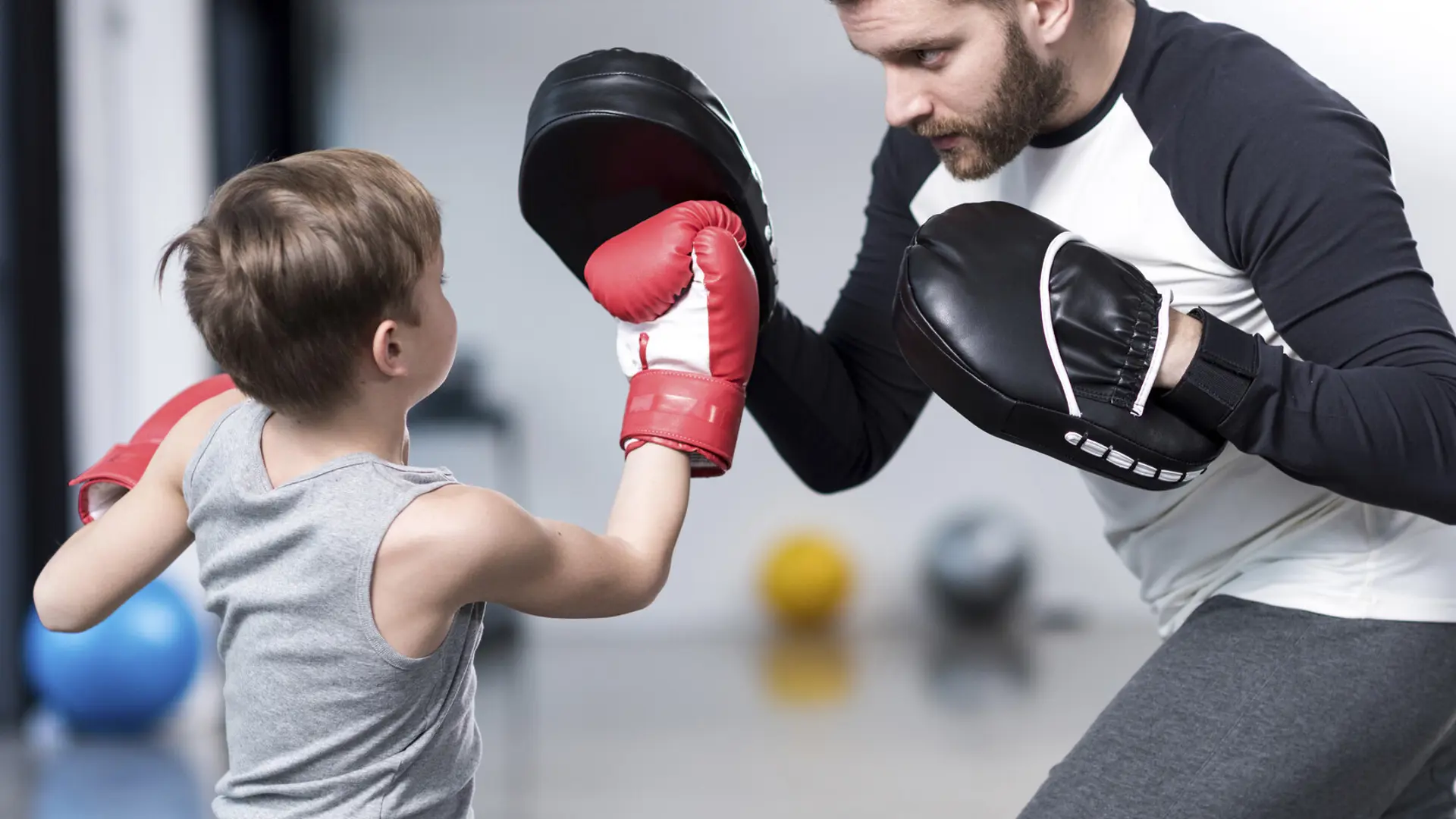
We all want children and young people to enjoy taking part in sport – and parents play a key role in that. Find out what else you can do.